












Mathematics at Upwell Academy
At Upwell Academy, our intent is to deliver a high-quality mathematics curriculum based on the principles of teaching for mastery, as advocated by the National Centre for Excellence in the Teaching of Mathematics (NCETM). We aim for every child to:
- Develop a deep, connected understanding of mathematical concepts, rather than superficial knowledge.
- Achieve fluency, reasoning, and problem-solving skills so they can apply mathematics confidently in a range of contexts.
- Progress through the curriculum at broadly the same pace, ensuring equity and access for all learners.
- Build resilience and a positive attitude towards mathematics, recognising that mistakes are part of learning.
- Be fully prepared for the next stage of education and equipped with mathematical skills for life.
Implementation
We implement the White Rose Maths mastery curriculum, which aligns with the NCETM’s Five Big Ideas of Mastery: coherence, representation and structure, mathematical thinking, fluency, and variation. Our approach includes:
- Daily lessons structured around small steps to secure understanding before moving on.
- Use of Concrete–Pictorial–Abstract (CPA) representations to build conceptual understanding.
- Carefully designed variation in tasks to expose mathematical structures and deepen learning.
- Whole-class teaching with same-day interventions to keep pupils on track.
- Reasoning and discussion embedded in lessons to develop mathematical language and thinking.
- Assessment for learning through questioning and ongoing checks to address misconceptions promptly.
- Professional development: staff engage with NCETM resources and training to ensure fidelity to mastery principles.
- Home learning supported by White Rose resources and fluency practice tools such as TT Rockstars.
Impact
The impact of our mastery approach will be evident through:
- Secure and deep understanding: pupils can explain concepts, make connections, and apply knowledge flexibly.
- Fluency and confidence: children recall key facts and use efficient strategies accurately.
- Reasoning and problem-solving: pupils justify answers and tackle unfamiliar problems with resilience.
- Closing gaps: disadvantaged pupils and those with SEND make strong progress through targeted support.
- Positive attitudes: pupils enjoy mathematics and see themselves as capable mathematicians.
- High attainment: pupils achieve well in statutory assessments and transition smoothly to secondary education.
Research from the NCETM shows that teaching for mastery significantly improves conceptual understanding and problem-solving skills, reducing attainment gaps and fostering long-term success in mathematics.
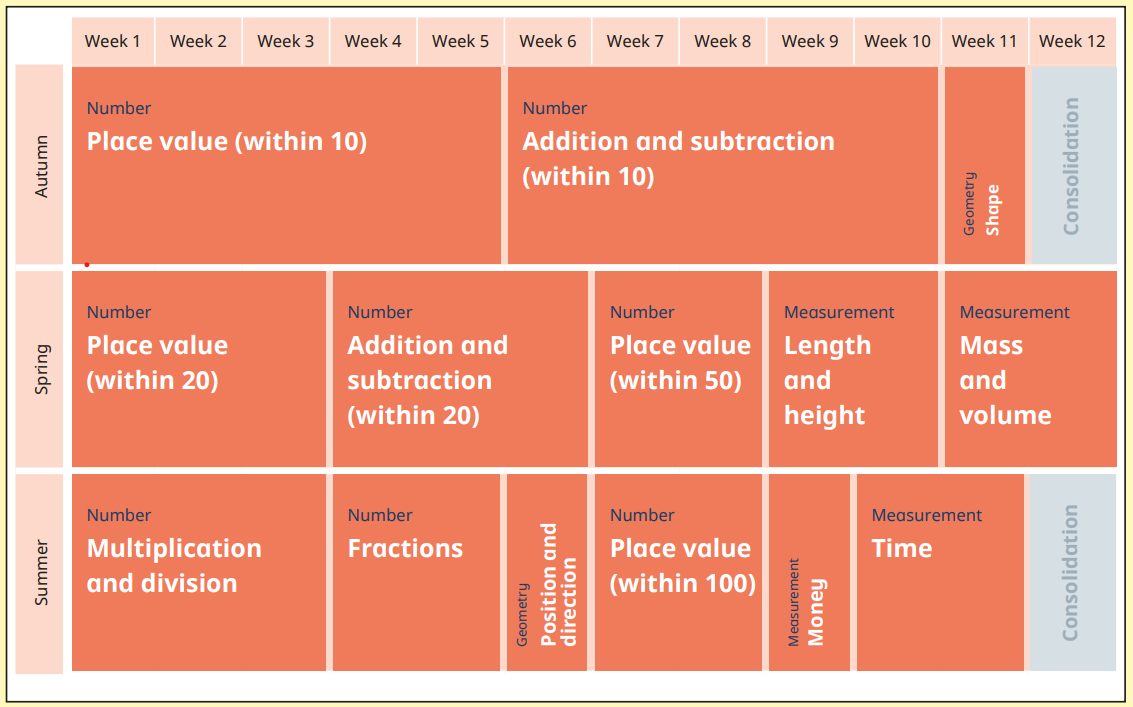
Year 1
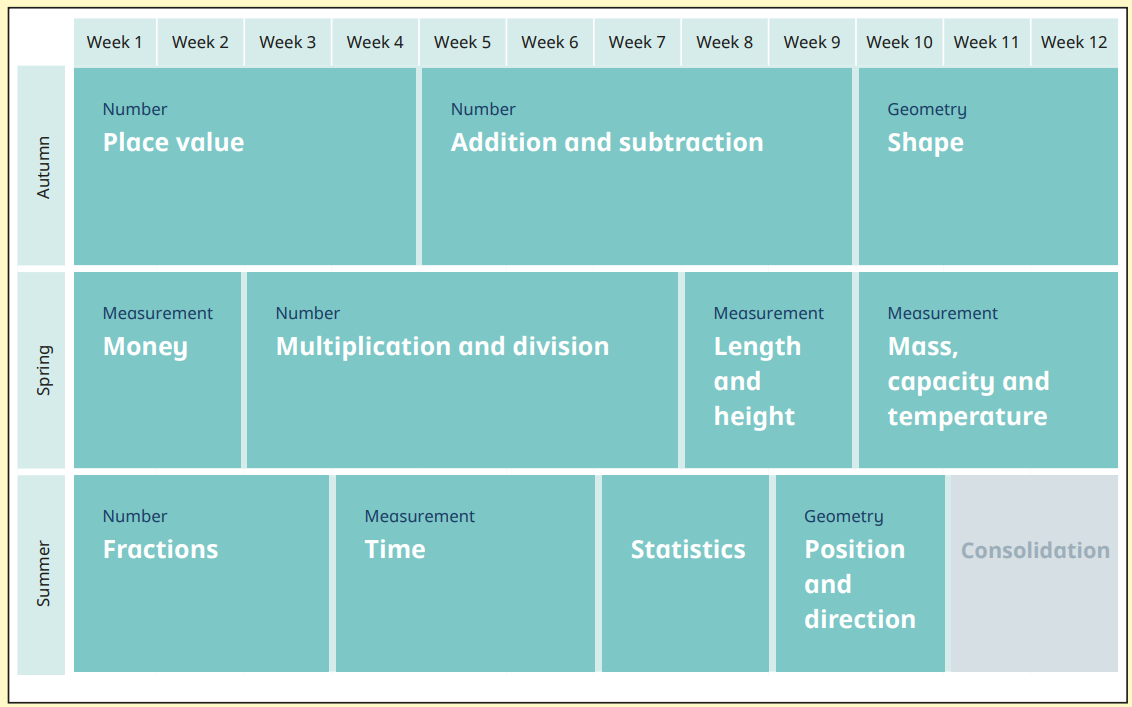
Year 2
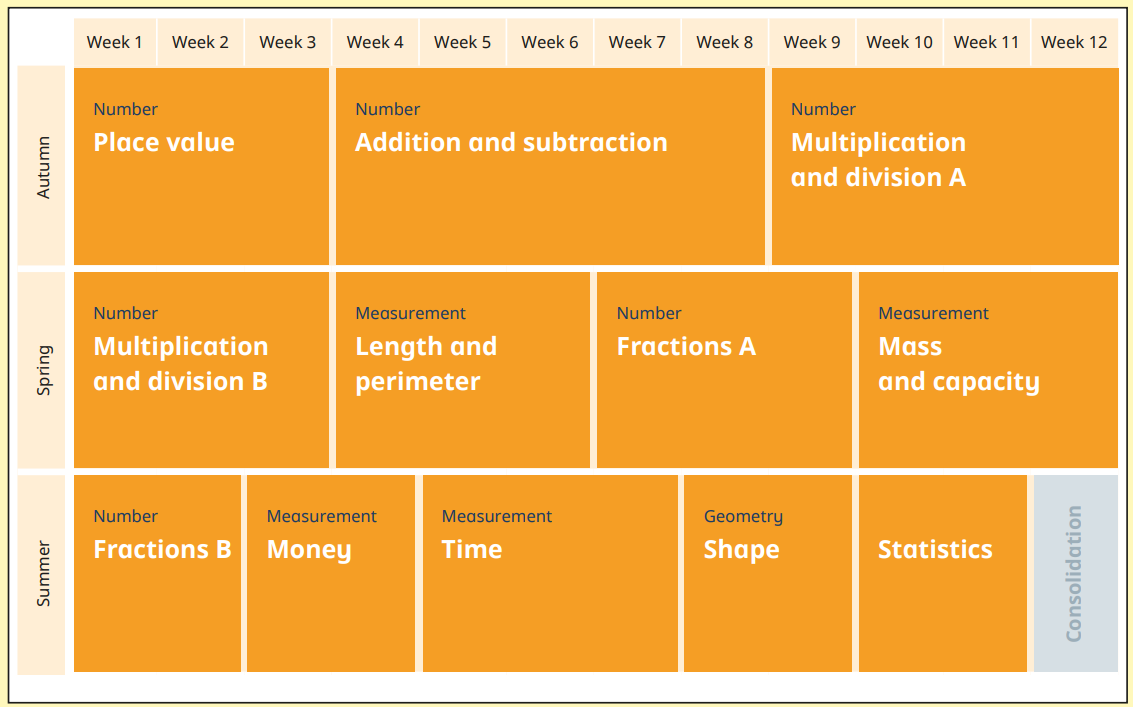
Year 3
Year 4
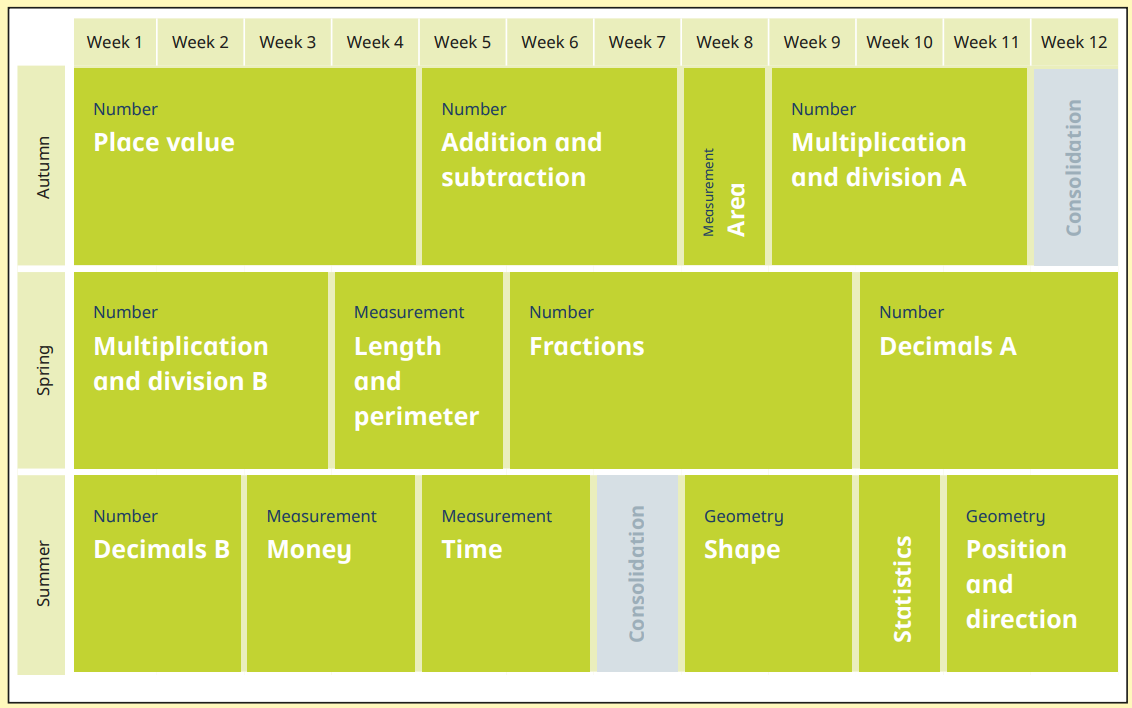
Year 5
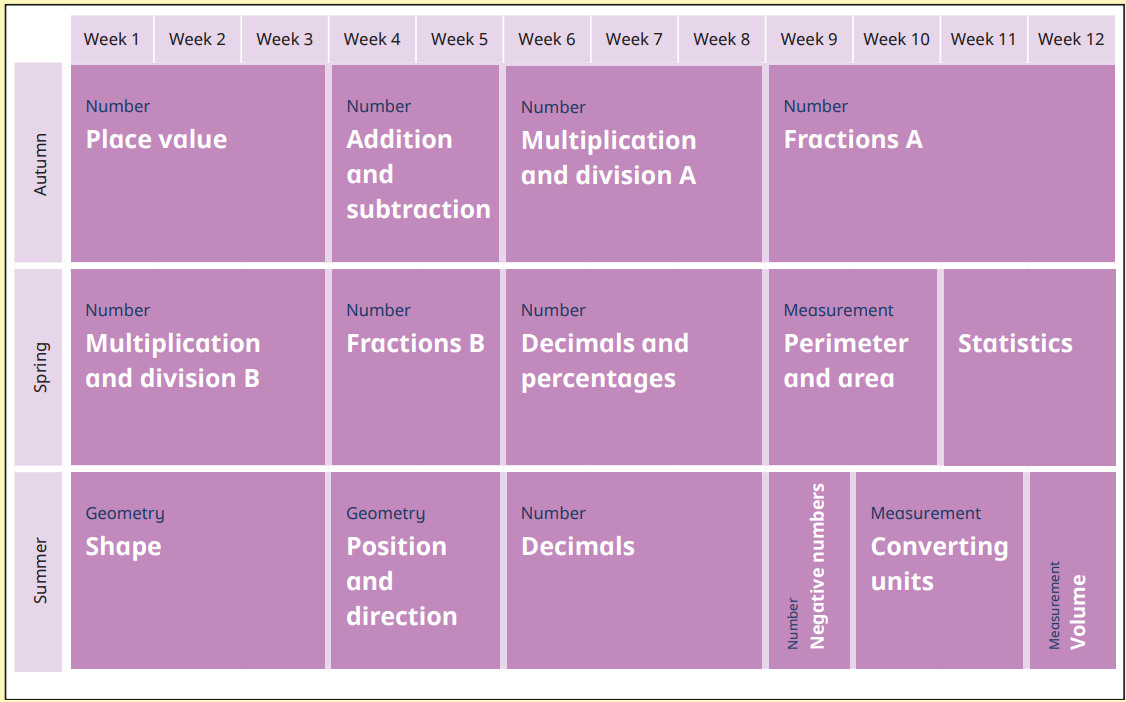
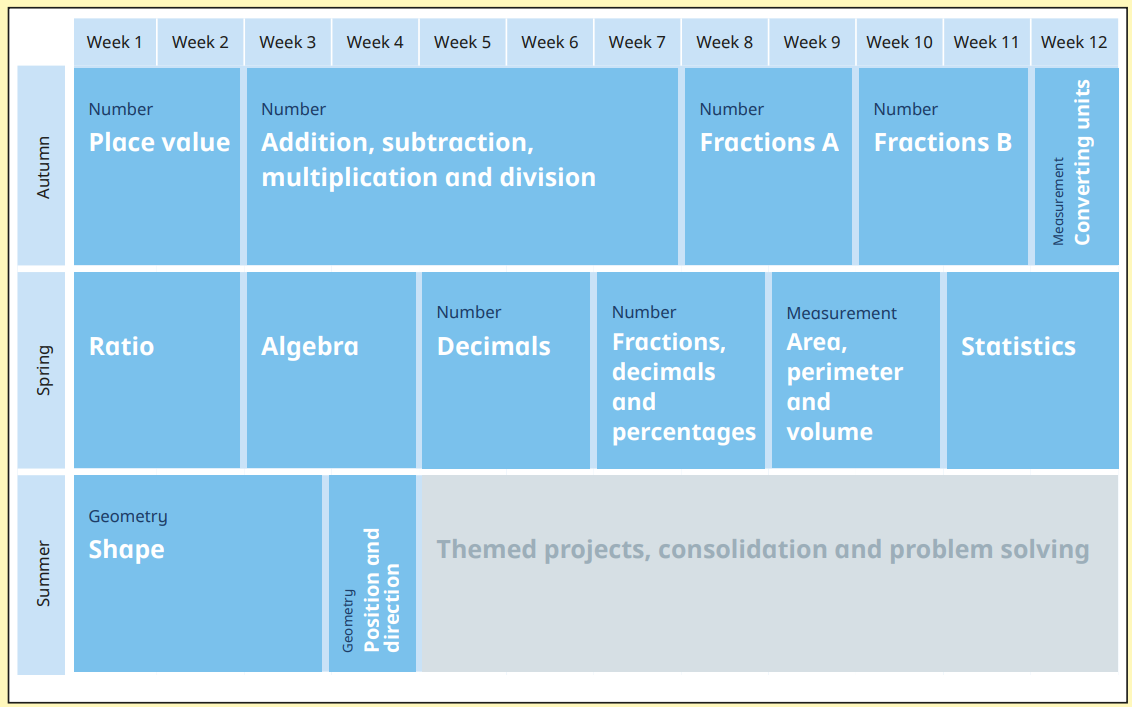
Year 6